Encaustic Kitchen Floor in Vermont Knolls
About This Project
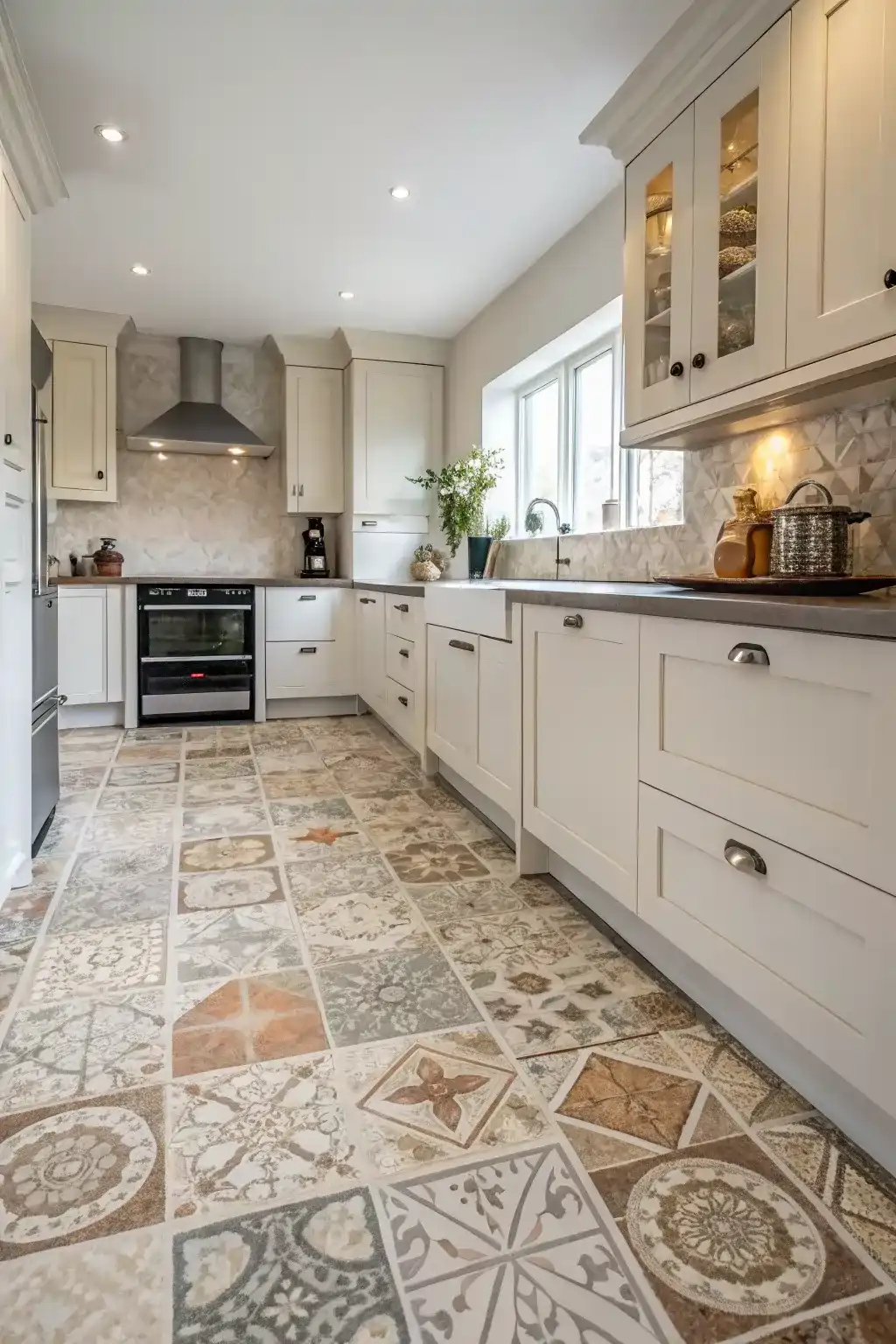
The homeowner in this Vermont Knolls kitchen chose encaustic cement tile for its mix-and-match patchwork look — individual tiles with different geometric patterns that combine to create an eclectic, vintage-inspired floor. Encaustic cement tile is not fired like ceramic or porcelain; it is hydraulically pressed from pigmented cement, which gives it a matte surface and a distinctive warmth but also makes it porous and sensitive to acidic cleaners. Before installation, we applied a penetrating sealer to each tile individually to prevent thin-set staining from bleeding through the porous body during setting.
The kitchen in this Vermont Knolls bungalow measures approximately 9x11 feet — a compact space typical to 1950s construction. The layout was centered on the doorway to keep the primary tile pattern visible from the main living area rather than centering it on the room's geometric center, which would have created narrow slivers at the entry threshold.
What We Did
Removed vinyl flooring, prepped concrete slab, applied floor leveler to address low spot near the sink wall
Pre-sealed each encaustic tile with penetrating sealer before setting to prevent thin-set bleedthrough
Set tile with white non-modified thin-set (required for cement tile to prevent color interference), used 1/16-inch spacers
Grouted with unsanded grout, then applied two coats of topical sealer after full cure