
Tile Installation in Manchester Square
Post-war homes near Manchester Blvd — bathrooms, kitchens, and entry floors done right.
Manchester Square sits between Manchester Blvd and Gage Ave in South Los Angeles, roughly between Vermont Ave and Main Street. The neighborhood's housing stock is concentrated in single-family homes from the late 1940s through the 1960s — a period when builders used concrete slab foundations more frequently than the older raised-floor construction to the north. That means more homes here are slab-on-grade, which simplifies some aspects of tile prep but still requires careful moisture checks before large-format tile goes down.
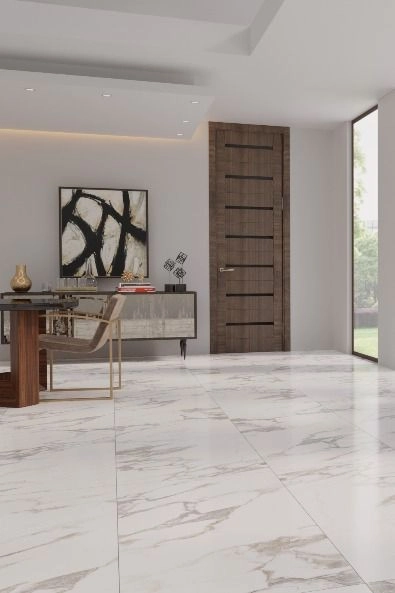
We work in Manchester Square regularly, handling bathroom retiles in homes where the original tile is past its useful life, kitchen floor replacements where vinyl or linoleum is being swapped for porcelain, and entry floors where the first impression of the house matters.
Services in Manchester Square
Residential Tile Installation
Kitchen floors, entryways, and living spaces in Manchester Square homes and duplexes.
Commercial Tile Installation
Retail and light commercial spaces along Manchester Blvd and nearby commercial corridors.
Bathroom & Shower Tile
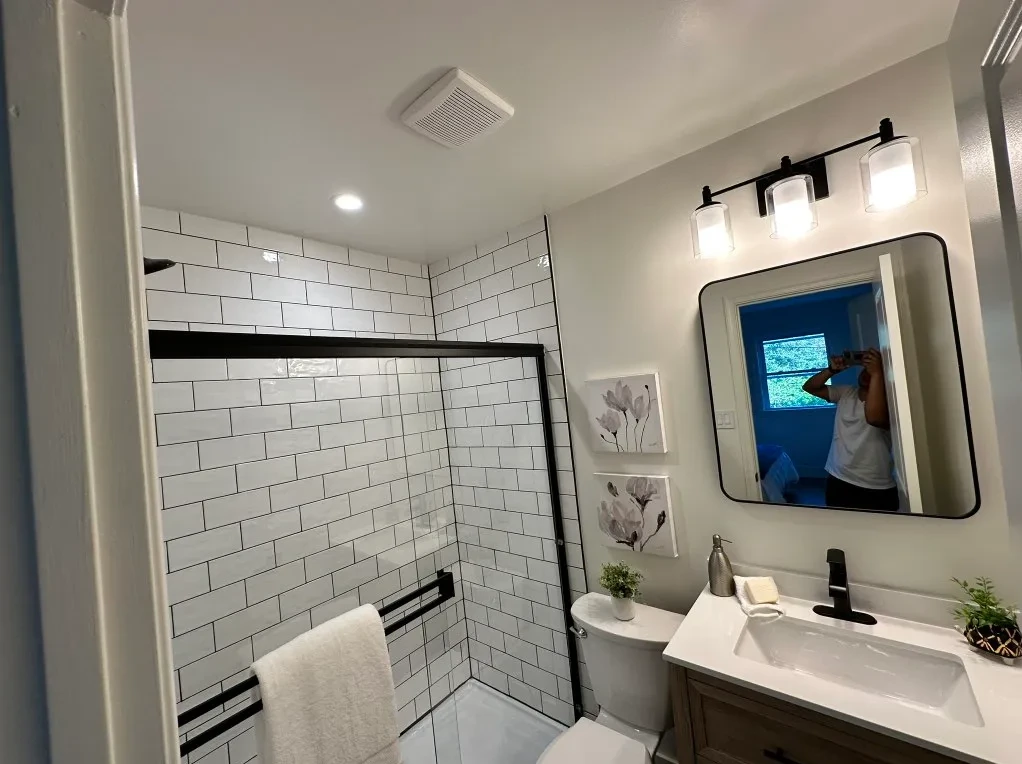
Full retiles and shower conversions in the compact bathrooms common to this era of home construction.
Manchester Square FAQ
Can you install tile in a rental property I own in Manchester Square?
Yes. We work with both owner-occupants and landlords. For rental properties, we can coordinate scheduling around tenant occupancy and, if needed, work in phases to minimize disruption. We give the same quality of work regardless of whether the homeowner lives in the property.
I have a duplex in Manchester Square — can you tile both units at once?
Yes, and doing both units in the same visit often reduces mobilization time. We would assess both units during the estimate visit, produce a combined scope, and schedule the work in a sequence that minimizes total disruption. Shared common areas like entry halls are typically done last so one unit can be fully operational while the other is being worked on.
The slab in my Manchester Square home has a crack — can I still tile over it?
It depends on whether the crack is active (still moving) or dormant. An active crack — one that is widening, shifting, or related to soil movement — needs to be treated as an expansion joint in the tile layout, with flexible sealant in the joint rather than grout. A dormant hairline crack can often be filled with epoxy crack filler before tiling. We assess cracks during the estimate visit and tell you honestly what they require.
Are there specific tile types that hold up better in Manchester Square's climate?
South LA's climate is mild — no freeze-thaw cycles, low humidity indoors. Porcelain is the standard choice for floors and wet areas because of its low water absorption and hardness. Natural stone (marble, travertine) is fine for interior floors but requires annual sealing to prevent staining. Cement encaustic tile is beautiful but porous and needs sealing and careful cleaning. The climate here does not restrict your choices much, but the maintenance requirements of each material are worth knowing before you commit.
A Local Focus on Manchester Square Bathrooms
The bathrooms in Manchester Square's post-war homes often have one thing in common: they were tiled once, in the 1950s or 1960s, with thin ceramic tile set in a mortar bed, and they haven't been touched since. That original mortar-bed installation is actually structurally sound in most cases — the problem is the grout, the fixtures, and the aesthetic. We handle full retiles of these bathrooms routinely, working around the low ceiling heights and compact layouts that define the era.